 Skip to content
By Reda | Last Updated: January 3, 2026 | 12 min read
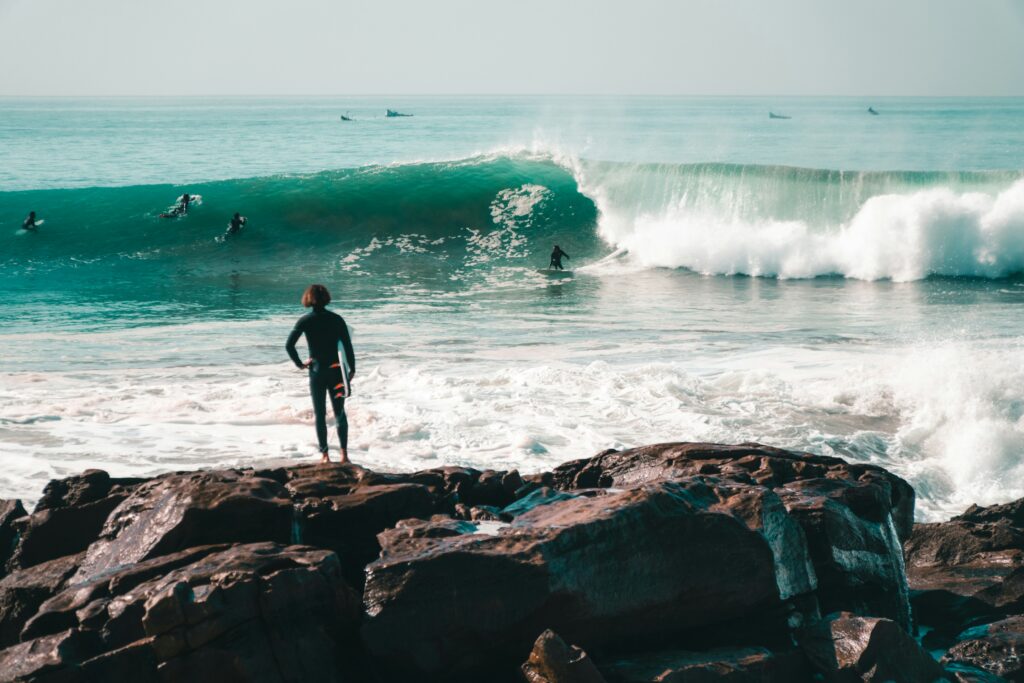
Picture this: you’re paddling out at Anchor Point as the sun breaks over the Sahara horizon, casting golden light across perfectly peeling right-handers. The water’s a crisp 16°C, your 3/2mm wetsuit keeps you comfortable, and you’ve got the session of your life ahead. This isn’t some far-flung fantasy in Indonesia or a crowded lineup in California. This is Morocco, and honestly? After surfing here for over a decade, I can tell you it rivals anywhere on the planet.
I moved to Taghazout in 2014 with a one-way ticket and a beat-up surfboard. What was supposed to be a three-month adventure turned into a permanent love affair with Morocco’s Atlantic coastline. Now, as a full-time surf instructor based in Taghazout, I’ve surfed every break between Dakhla and Tangier, guided hundreds of surfers through their first waves, and watched this coastline through every swell, season, and mood swing the ocean could throw at it.
This guide cuts through the usual tourist fluff you’ll find online. I’m sharing the spots I actually surf, the conditions I’ve learned to read over thousands of sessions, and the insider knowledge that only comes from being out there nearly every day for the past ten years of surfing in morocco.
Why Morocco Has Become a Global Surf Destination
Let’s be clear: Morocco wasn’t always on the international surf map. Back in the 1960s, a handful of wandering surfers stumbled upon these breaks while driving down the coast in VW vans. They kept it quiet for decades. But the secret’s out now, and for good reason.
The geography here is absurdly perfect for surfing. Morocco’s Atlantic coast faces directly into the North Atlantic swell window, catching every low-pressure system that forms between Newfoundland and Iceland. These swells march south with remarkable consistency, especially between October and April. We’re talking about 320 days a year with rideable waves. I’ve had seasons where I didn’t miss a surf for three months straight.
What makes it special isn’t just the consistency though. It’s the variety. Within a 30-kilometer stretch of coastline around Taghazout, you’ve got powerful reef breaks, mellow beach breaks, long point breaks, and everything in between. Some mornings I’ll check four different spots before 8 AM, each one working differently based on the swell direction, tide, and wind.
The cost factor matters too, especially if you’re coming from Europe. A flight from London or Paris runs about €100-150. Accommodation in Taghazout starts at €15 a night for basic rooms, while a solid surf house with a pool costs maybe €40-50. Compare that to Portugal, Bali, or Costa Rica. A tajine costs 40 dirhams (about €4). Board rentals are 150 dirhams a day. You can surf world-class waves on a budget that wouldn’t last you three days in Southern California.
Then there’s the culture piece that nobody talks about enough. Morocco isn’t just a surf destination—it’s a country where you’re drinking mint tea with local fishermen after your session, exploring ancient medinas on rest days, and getting invited to someone’s home for couscous on Friday. The juxtaposition of riding perfect waves in the morning and wandering through a 500-year-old market in the afternoon? That doesn’t exist in many places.
Understanding Morocco’s Surf Seasons (The Reality of Surfing in Morocco)
Everyone asks about the best time to surf Morocco, and the answer depends entirely on your level and what you’re after.
October through March is when this place fires on all cylinders. The North Atlantic comes alive with storm after storm, sending clean, powerful swells down the coast. During these months, I’ve surfed head-high Anchor Point so many times I’ve lost count. The offshore winds (from the east) are most consistent during this period, cleaning up the faces and creating those picture-perfect conditions you see in magazines.
But here’s what the blog posts don’t tell you: it gets crowded. Anchor Point on a perfect December morning might have 50+ people out. Killer Point too. If you’re an intermediate surfer, you’ll be fighting for scraps. The water’s cold—15-17°C—so you need a proper 3/2mm or 4/3mm wetsuit, boots, and sometimes a hood for those early morning sessions.
April and May are my secret favorite months. The winter swells start spacing out, but you still get solid 3-6 foot days regularly. More importantly, half the crowd has gone home. The water starts warming up to 18-19°C. You can surf in a springsuit or even boardshorts on warm afternoons. I’ve had some of my best sessions at Hash Point and Mysteries during these months with maybe ten people out total.
June through September is beginner season. The swells drop to 1-3 feet most days, the water hits 20-22°C, and conditions become incredibly user-friendly. This is when I run most of my surf lessons because students can actually focus on technique rather than survival. Panoramas, Banana Beach, and Devil’s Rock work beautifully during these months. The tradeoff? If you’re an advanced surfer, you’ll be bored unless a random summer swell shows up (which happens maybe once or twice a season).
Water temperatures range from 15-22°C throughout the year.
One pattern I’ve noticed over the past few years: swell consistency has actually improved slightly during shoulder seasons. We’re getting more September and May swells than we did a decade ago. Climate shifts, I suppose, though I’m not scientist enough to explain why.
According to Surfline’s Morocco forecast data, the North Atlantic produces consistent swells from October through April.
The 11 Best Places to Surf in Morocco
I’m listing these roughly north to south, focusing on the spots I return to consistently and recommend without hesitation. These aren’t just famous names—these are waves I’ve surfed hundreds of times and genuinely believe are world-class.
1. Anchor Point, Taghazout
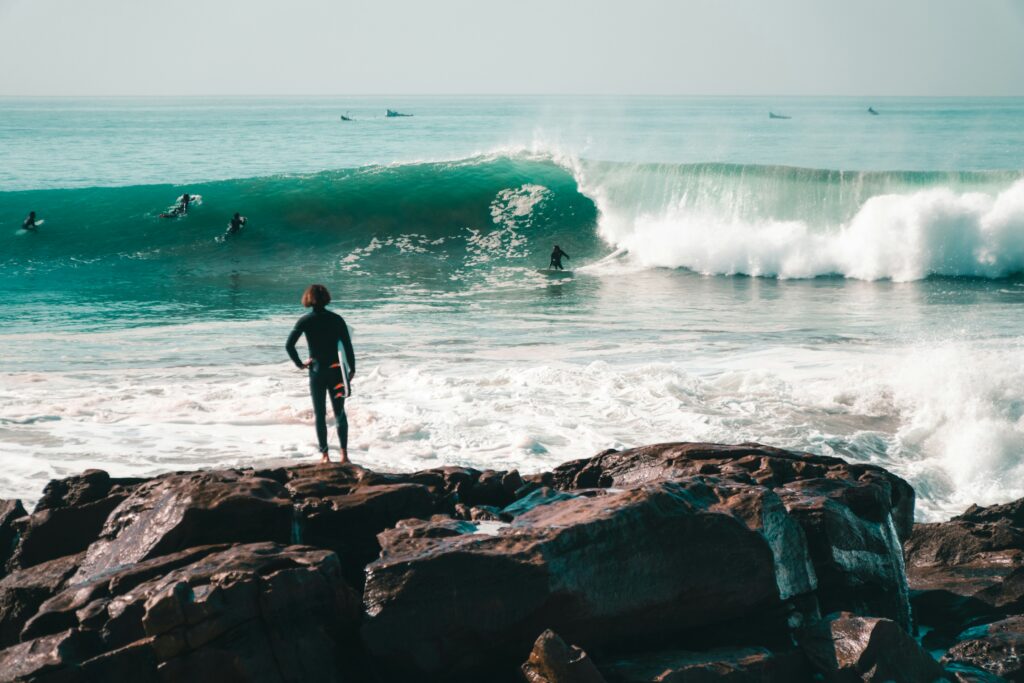
Let me start with the obvious one, because it’s obvious for a reason. Anchor Point is the crown jewel, the wave that put Morocco on the map, and on its day, one of the best right-hand point breaks on Earth.
The wave wraps around a rocky point, starting from a deep-water takeoff zone and peeling down the reef for 200-300 meters on a good swell. At 4-6 feet, it’s a dream: long, walling sections perfect for carving turns, interspersed with occasional barrel sections if you know where to set up. I’ve ridden waves here that lasted over a minute from takeoff to channel.
Here’s the reality though: Anchor Point is fickle and crowded. It needs a solid 6-foot+ swell with west or northwest direction to really light up. Anything under 4 feet and it tends to shut down on the inside sections. The crowd on good days is intense—locals get priority (as they should), and you need to be a confident, competent surfer to navigate the lineup without getting in someone’s way.
The best strategy? Surf it at sunrise before the mob shows up, or on bigger days (8+ feet) when the crowd thins out because it gets genuinely heavy. I’ve surfed 10-foot Anchor Point with only 15 people out because everyone else took one look and went to find something mellower.
Low to mid tide works best. High tide creates weird backwash off the rocks. Park at the top of the point (locals will show you where), and walk down. Bring booties—the rocks are sharp and covered in sea urchins.
2. Killer Point, Taghazout
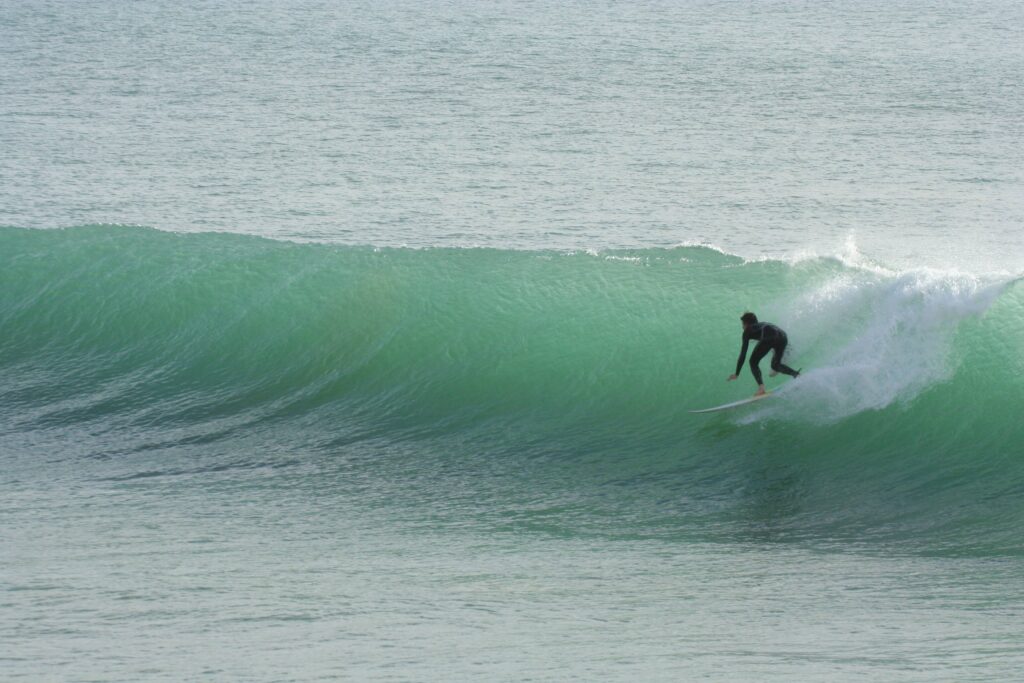
A kilometer south of Anchor, Killer Point is my go-to when Anchor’s too crowded or slightly too small. It’s similar in style—another right-hand point break—but requires less swell to work and offers a slightly mellower vibe.
Killer starts breaking consistently from 3 feet and handles up to 8-10 feet before it gets sketchy. The wave is slightly shorter than Anchor (maybe 100-150 meters on average) but often faster and hollower. I’ve gotten genuinely barreled at Killer more times than at Anchor, especially during that mid-tide push when the swell wraps just right around the rocky outcrop.
The local crew here is tight but generally welcoming if you show respect. Don’t snake, don’t drop in, and you’ll be fine. I’ve made some of my closest Moroccan friends in the Killer Point lineup over the years—guys who’ve been surfing this wave since they were kids and know every rock, every boil, every quirk of the reef.
One insider tip: when it’s overhead and everyone’s at Anchor, check Killer. Sometimes it’s actually better because the reef configuration handles bigger swells more predictably. I’ve scored perfect, uncrowded sessions there on days when Anchor looked like a circus.
3. La Source (Boilers), Taghazout
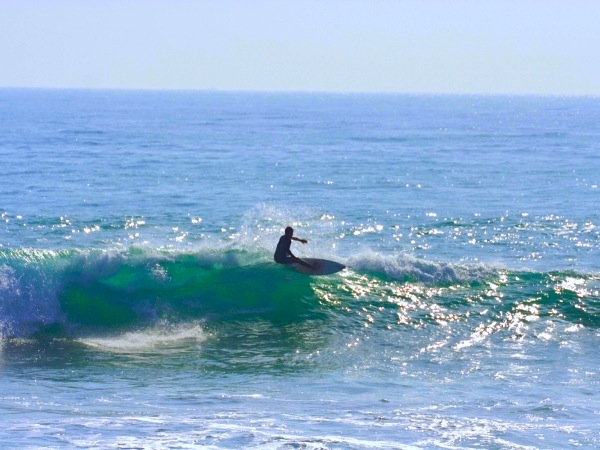
This is where things get serious. La Source sits on a shallow, exposed reef just north of Taghazout village, and when it breaks, it’s one of the heaviest waves in Morocco. We’re talking thick, dredging barrels over a reef that sits maybe three feet underwater at low tide.
I only surf La Source maybe 10-15 times a year because it needs very specific conditions: 6+ foot swell, light winds, and ideally mid to high tide to add some water over the reef. When those stars align, it’s absolutely incredible—proper Indo-style barrels in the Atlantic.
But you need to know what you’re doing. I’ve seen people get seriously hurt here. The wave breaks fast and hard, the reef is unforgiving, and if you fall in the wrong spot, you’re getting held down and dragged across sharp volcanic rock. Wear a helmet if you’ve got one, and don’t paddle out unless you’re comfortable at overhead reef breaks.
The locals here are protective (rightfully so) because they don’t want inexperienced surfers getting themselves killed. Earn your place by demonstrating you can handle it. Watch a few sets first. Know where the channel is. And for the love of everything, don’t go straight at someone’s wave.
4. Panoramas Beach, Taghazout
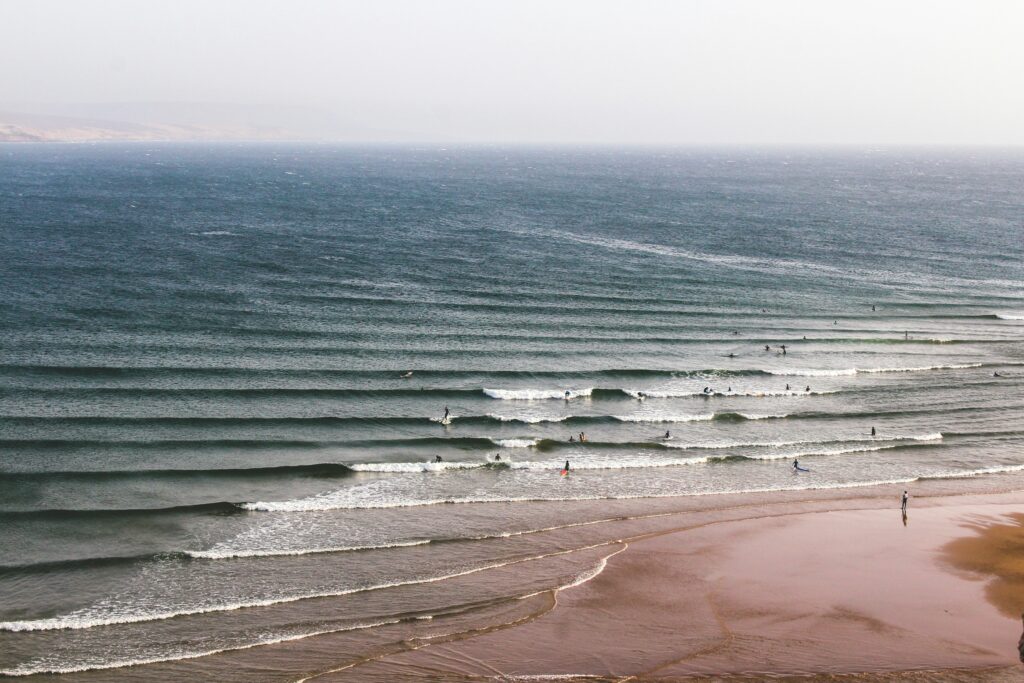
Now we shift gears completely. Panoramas is the gentle giant of Taghazout, a wide, sandy beach break that works in almost any conditions and welcomes surfers of all levels.
This is where I teach most of my beginner surf lessons because it’s incredibly forgiving. The waves break over sand, creating soft, rolling whitewaters perfect for learning fundamentals. On bigger days (4-6 feet), the outside peaks offer fun, punchy sections for intermediate surfers wanting to work on their turns.
What I love about Panoramas is its consistency. When everywhere else is flat or blown out, there’s usually something rideable here. The south end (near the construction sites) tends to have better shape than the north end, and low tide often creates nice little banks.
Summer is peak season here. The waves hover around 2-3 feet, the water’s warm, and you’ll see dozens of surf schools running lessons from sunrise to sunset. If you’re just finishing your first week of surf instruction and want to practice what you learned, this is your spot.
One warning: watch out for rips on bigger swells. The channels can pull strongly, especially around mid tide. If you get caught, don’t panic—just ride it out past the break and paddle diagonal to shore.
5. Banana Beach, Taghazout
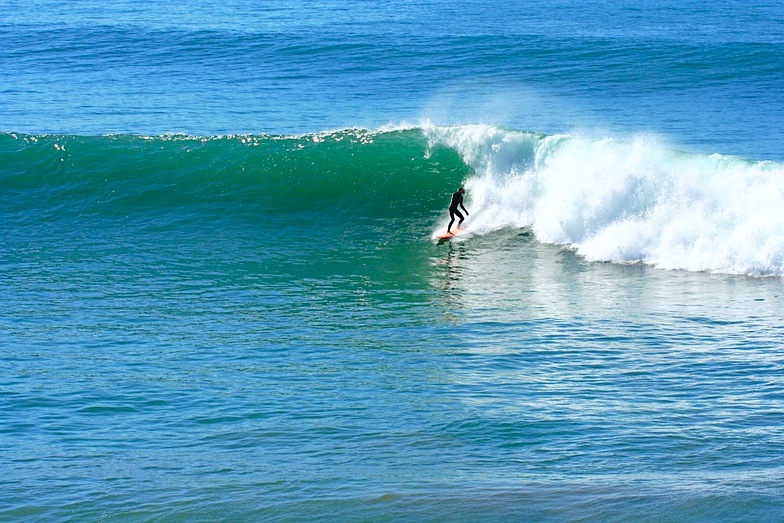
Just south of the village center, Banana Beach is another excellent beginner-to-intermediate spot that I recommend constantly. It’s essentially a smaller, more protected version of Panoramas with a slightly more scenic backdrop (dramatic cliffs on the south end).
The waves here peak up nicely over a sandy bottom with occasional rock patches. On small days (2-3 feet), it’s perfect for longboarding or working on your cross-stepping. When it gets overhead, the outside peaks can surprise you with their punch and occasional barrel sections.
I surf Banana Beach more for fun than challenge. It’s where I go when I want to loosen up, try weird maneuvers, or surf a different board. The vibe is mellow—families, beginners, local kids learning to surf. Nobody’s trying to prove anything.
Best time is early morning or late afternoon when the wind hasn’t picked up yet. Mid-day, it often gets blown out by onshore winds. Park along the cliff road and walk down the path.
6. Devil’s Rock, Tamraght
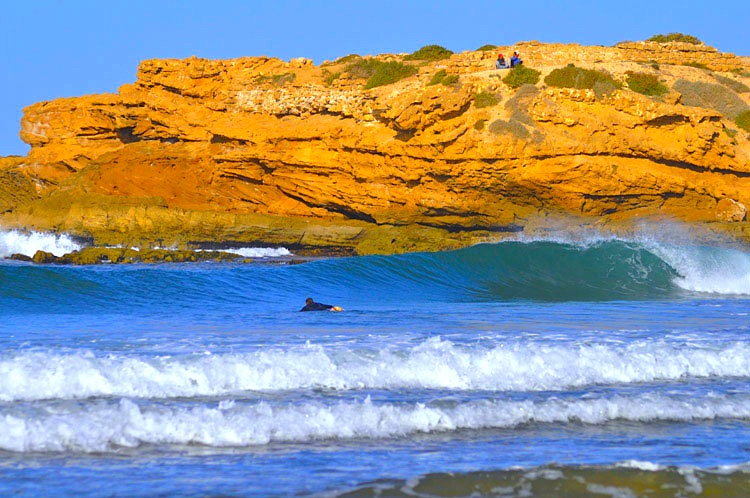
Three kilometers south of Taghazout in the village of Tamraght sits Devil’s Rock, a reef-and-sand hybrid that offers some of the most fun, performance-oriented waves on this stretch of coast.
The wave breaks right (and occasionally left on bigger swells) off a prominent rock formation, creating long, workable walls perfect for practicing your entire repertoire of turns. It handles 2-8 feet comfortably, works on most tides, and doesn’t get nearly as crowded as the Taghazout spots because it requires a slightly longer walk.
I probably surf Devil’s Rock more than anywhere else these days. It’s my Monday spot, my “let’s just go get wet” spot, my “check everywhere else first but always end up here” spot. The local crew is small and friendly. There’s never that aggressive vibe you get at more famous breaks.
The right side of the rock produces the best waves, especially around mid-tide when the reef creates a nice launching pad before the wave transitions to sand. The left can be fun on bigger northwest swells but tends to close out. Bring reef booties—the rocks are sharp getting in and out.
7. Anza Beach, Agadir
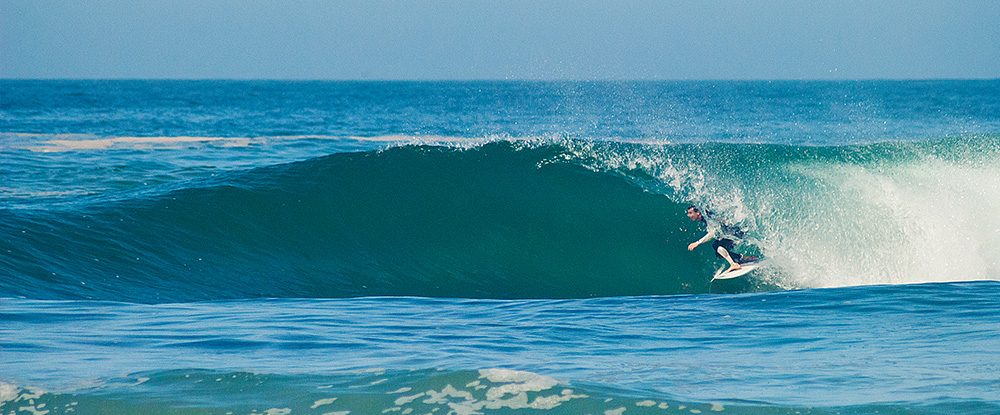
Let’s head south to Agadir proper. Anza Beach stretches for several kilometers along the city’s coastline and offers multiple peaks depending on swell and sandbar formation.
This isn’t a “destination surf spot” in the way Anchor Point is, but if you’re staying in Agadir or want to escape the Taghazout scene, Anza delivers consistent, fun beach break waves. The best section is usually near the golf course (north end), where the sandbars organize more predictably.
I surf Anza when I have errands in Agadir or want to combine a surf session with city activities. The waves are rarely amazing but almost never unsurfable either. It’s solid 6/10 surfing most days, which is perfectly fine when you just want to paddle out and catch some waves without expectations.
Summer is actually excellent here because the south swells wrap into the bay nicely. Winter can get messy with onshore winds. Check it in the morning—if it’s clean, go for it. If it’s junky, head back north to Taghazout.
8. Essaouira
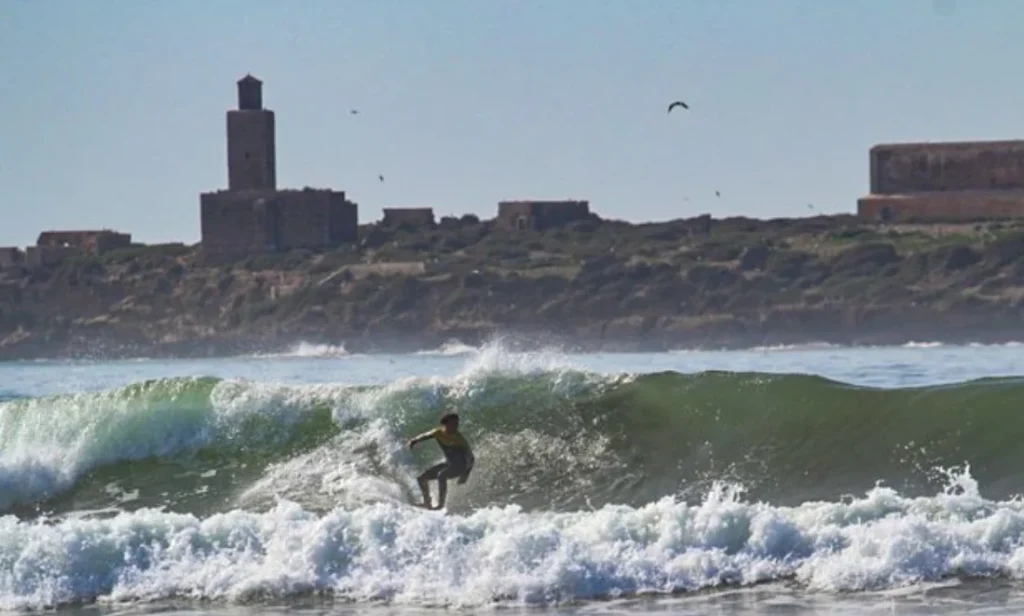
Two hours north of Agadir lies Essaouira, a gorgeous coastal city with a completely different surf character than Taghazout. The main beach in Essaouira is windy—like, seriously windy. It’s one of Africa’s premier windsurfing and kitesurfing destinations because the trade winds blow almost constantly from March through October.
For surfing, that makes it tricky. The main beach can work on small swells with light winds, but it’s usually choppy. However, there are protected spots north of the city (like Sidi Kaouki and Moulay Bouzerktoun) that offer fun, powerful beach break waves with fewer crowds than Taghazout.
I make the drive up maybe once a month, usually combining it with exploring the medina and eating fresh grilled fish in the harbor. Sidi Kaouki especially is worth the trip—a long, empty beach with consistent peaks and a laid-back vibe. It gets big in winter and can produce legitimate barrels on the right swell.
The water’s notably colder here than Taghazout—add 1-2°C to whatever wetsuit thickness you’d normally wear.
9. Imsouane
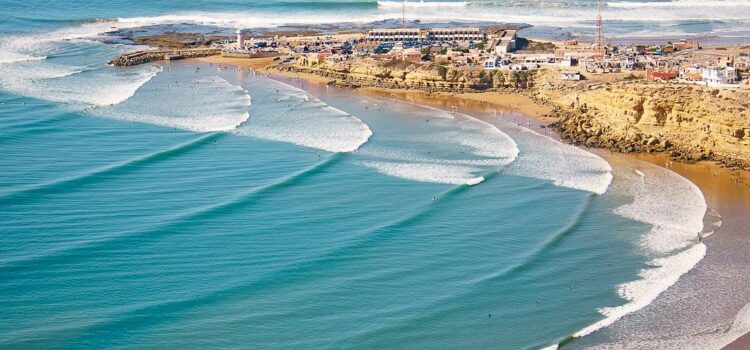
About 90 minutes north of Taghazout sits one of Morocco’s most legendary spots: Imsouane. This place has two distinct breaks—”The Bay” and “The Cathedral”—and when it’s on, it’s absolutely magical.
The Bay is ridiculously long. I’m talking 400-600 meter rides on a good swell. It’s a mellow, walling right-hander perfect for longboarding, logging, and generally just enjoying the act of surfing. You can set up inside turns, practice cross-steps, and genuinely surf for two minutes straight from the outside lineup to the inside. It works from 2-8 feet and handles crowds remarkably well because the wave is so long everyone spreads out.
The Cathedral (also called “The Point”) is faster, hollower, and more performance-oriented. It breaks on a reef point south of the bay and offers proper barrel sections on bigger swells. This is where the local rippers hang out and where things get more territorial.
I try to surf Imsouane at least twice a month. It’s one of those places that reminds you why you fell in love with surfing in the first place—pure, uninterrupted glide with stunning scenery. The village itself is tiny and charming, with excellent fresh fish restaurants lining the harbor.
Only downside? It gets crowded. Really crowded. On perfect days, The Bay might have 100+ people out. Go early, be patient, and remember that every single person out there drove an hour or more specifically to surf this wave. Everyone deserves their share.
10. Sidi Ifni
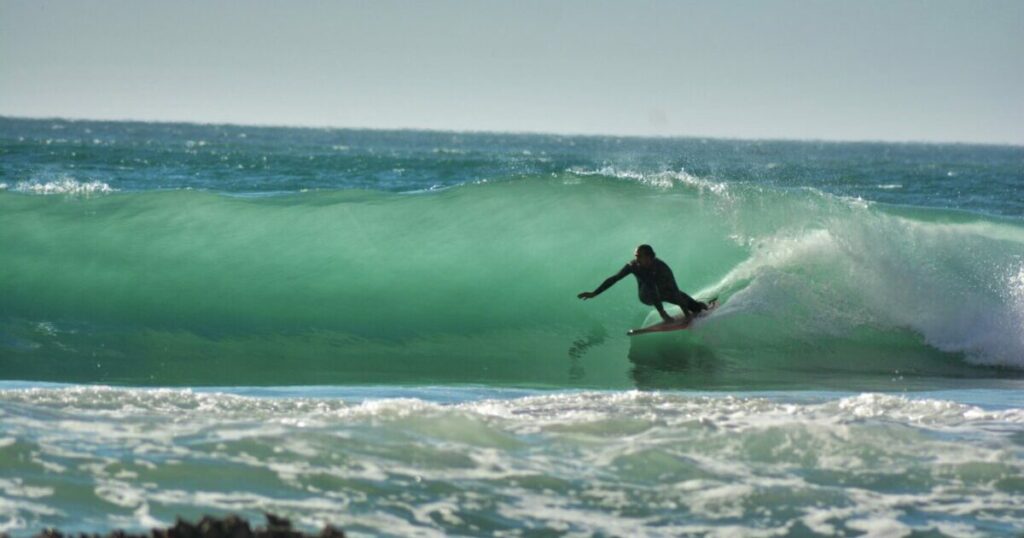
This one’s a mission—about 3 hours south of Agadir—but it’s worth it for the adventure factor alone. Sidi Ifni is a remote coastal town with Spanish colonial architecture, zero tourists, and a handful of surf spots that rarely see crowds.
The main break is a heavy reef that produces thick, powerful lefts on northwest swells. It’s advanced-level surfing, not for the faint of heart, but watching it from the cliff is worth the drive even if you don’t paddle out. There are also beach breaks north of town that work on smaller swells.
I’ve made maybe ten trips to Sidi Ifni over the years, usually combining it with camping trips down the coast. It’s not somewhere I’d recommend for your first Morocco surf trip, but if you’ve already surfed Taghazout extensively and want to explore, it offers a genuine off-the-beaten-path experience.
The town itself feels frozen in time. Crumbling art deco buildings, fishing boats pulled up on the beach, locals who are genuinely surprised to see foreign surfers. Stay at one of the basic guesthouses, eat grilled sardines at the port, and surf waves you’ll probably have to yourself.
11. Dakhla
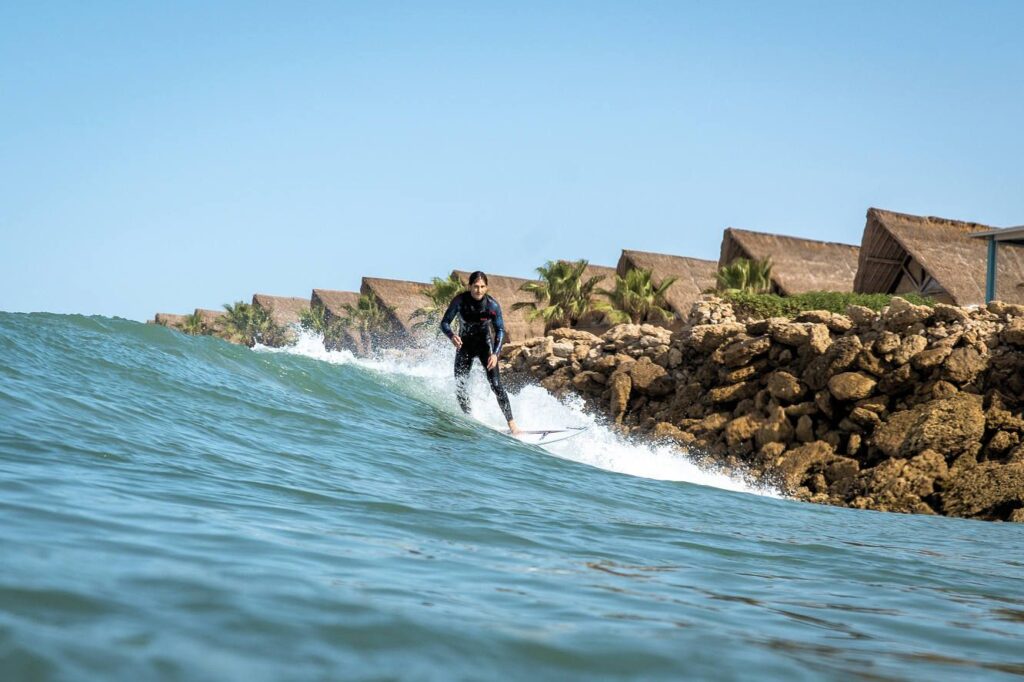
I’m including Dakhla because it’s technically Morocco and supposedly has incredible surf, but I’ll be honest: I’ve only been twice, and it’s a completely different trip than Taghazout. Dakhla is way down south—like, almost Western Sahara territory—and requires a two-day drive or a flight from Casablanca.
The surf here revolves around a massive lagoon and exposed Atlantic coast with powerful reef breaks. When it’s good, it’s world-class and empty. But it’s remote, expensive to reach, and oriented more toward kite surfers and serious surf explorers.
If you’re planning a dedicated mission and have the time and budget, Dakhla is apparently incredible. But for most people visiting Morocco to surf, the Agadir-Taghazout corridor offers better value and variety.
Why Taghazout Became Morocco’s Surf Hub
Let’s talk about why this little fishing village became the epicenter of Moroccan surf culture, because it’s not random.
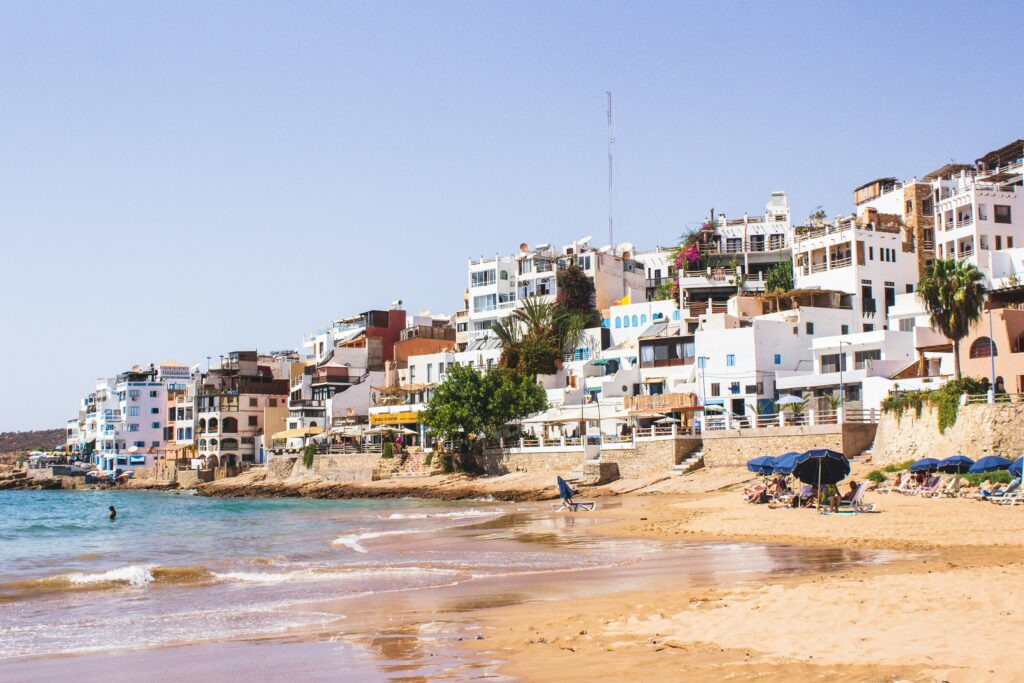
First, the geography. Within a 5-kilometer radius of Taghazout village, you’ve got Anchor Point, Killer Point, Hash Point, La Source, Panoramas, and Banana Beach. That’s six world-class spots accessible by a short walk or 5-minute drive. Nowhere else in Morocco offers that density of quality breaks.
Second, the infrastructure evolved organically. In the early 2000s, a handful of surfers opened the first surf houses and camps. They were basic—shared rooms, cold showers, communal dinners—but they worked. As more surfers discovered the area, more accommodation opened. Now you’ve got everything from €10 hostel beds to luxury surf villas with infinity pools.
The village itself maintained its authenticity despite the growth. Yes, there are now smoothie bars and yoga studios alongside traditional tea shops, but the core character remained. The same families run the same fishing boats. The same bakery makes the same fresh bread every morning. The call to prayer still echoes five times a day. It never became sanitized or resort-ified.
What I love most about Taghazout is the community. There’s a genuine crew of expat surfers who’ve made this place home (myself included), local Moroccan surfers who rip and keep the spirit authentic, and a constantly rotating cast of surf travelers from every corner of the globe. On any given evening at one of the clifftop cafés, you might be chatting with a German photographer, a Brazilian pro surfer, and a Berber fisherman who’s been surfing Anchor Point since the 1980s.
The introduction of structured surf education here has been significant too. A decade ago, surf schools were rare and informal. Now, professional instruction is widely available, which has made the sport accessible to people who’d never otherwise try it. I’ve taught everyone from 6-year-old kids to 65-year-old retirees their first waves at spots like Panoramas, and watching that progression happen in a supportive environment is genuinely rewarding.
For anyone considering surf lessons in Taghazout, the advantage is having experienced instructors who know these breaks intimately—where the channels are, when the tides shift, which spots work for your level on any given day. That local knowledge compresses your learning curve significantly.
What Nobody Tells You About Surfing in Morocco
Time for some real talk about the stuff that doesn’t make it into promotional materials.
The crowd factor is real. Peak season at Anchor Point, Killer, and Imsouane can be genuinely frustrating if you’re not prepared for it. I’ve sat in lineups where I caught three waves in two hours because the aggression level was high and I wasn’t willing to snake people. This is world-class surf accessible to budget travelers—of course it’s crowded.
The solution? Adjust your expectations and strategy. Surf early (sunrise is always less crowded). Target the less-famous spots. On big days, surf the heavy breaks that thin out the crowds. Or accept that catching fewer, better waves is part of the deal and enjoy the show between sets.
Localism exists but it’s generally manageable. Moroccan surfers have rightfully claimed their priority at certain breaks. At spots like Anchor Point and Killer, the local crew gets first dibs on the best waves. This isn’t aggression—it’s respect for the people who’ve been surfing these breaks their entire lives.
Earn your place by being courteous. Say “salam” when you paddle out. Wait your turn. Don’t take three waves in a row. Compliment someone’s barrel. Small gestures go a long way in Moroccan culture. I’ve had local surfers literally paddle over and guide me into better positioning once they saw I was respectful and capable.
Your board will get dinged. The reef breaks here are unforgiving. I’ve put more dings in boards during my years in Morocco than everywhere else I’ve surfed combined. Bring a solid, reef-ready board or rent locally. Have a ding repair kit. Accept that your pristine new board won’t stay pristine.
The wind can be frustrating. Morocco gets consistent onshore winds from late morning through afternoon, especially in summer. This turns glassy morning sessions into choppy, blown-out messes by noon. Adapt by surfing early, taking midday breaks, or finding protected spots.
Safety matters more than you think. I’ve seen people need stitches from sea urchin encounters, suffer concussions from hitting reefs, and get into genuine trouble with rips and currents. Wear booties on reef breaks. Know your limits. Surf with a buddy if possible. The nearest hospital is in Agadir—a 30-minute drive when things go wrong.
Morocco is not Bali or Costa Rica when it comes to infrastructure. The roads are rough. WiFi is spotty. Hot water sometimes doesn’t work. Food poisoning happens occasionally. If you need everything to be perfect and comfortable, this might not be your spot. If you can roll with the chaos and occasional dysfunction, Morocco will reward you with incredible experiences.
Practical Details for Your Morocco Surf Trip
Let’s cover the logistics that actually matter:
Getting here: Fly into Agadir-Al Massira Airport. Ryanair, EasyJet, and TUI fly direct from most major European cities. From the airport, take a grand taxi to Taghazout (negotiate 200-250 dirhams) or arrange pickup through your accommodation.
When to book: December-February requires advance booking (2-3 months) if you want decent accommodation. Shoulder seasons (October-November, March-April) offer flexibility. Summer, you can often show up and find places day-of.
Where to stay: Taghazout village center is walkable to most breaks. Tamraght (3km south) is quieter and slightly cheaper. Avoid the new development Taghazout Bay unless you prefer resorts—it’s sterile and disconnected from the vibe.
Transportation: Most people rent scooters (70-100 dirhams/day) or cars (250-400 dirhams/day). Walking is viable if you’re staying centrally. Petit taxis work for longer trips (negotiate everything beforehand).
Board rentals: 150-200 dirhams per day for shortboards, 200-250 for longboards. Quality varies wildly—inspect carefully for damage and proper fin setup. Many places offer weekly rates (800-1000 dirhams) which make sense for longer stays.
Wetsuit: October-May requires 3/2mm minimum, 4/3mm for cold mornings. June-September, you can get away with springsuit or even boardshorts on warm days. Rent locally (100-150 dirhams/day) rather than flying with your own unless you’re staying months.
Food: Tagines cost 40-60 dirhams. Fresh fish from the port runs 80-120 dirhams. Breakfast at local cafés is 30-40 dirhams. Surf house dinners range 60-80 dirhams. Budget €15-20 per day for solid meals.
Cultural considerations: Morocco is a Muslim country. Dress modestly away from the beach (cover shoulders and knees). Avoid public displays of affection. Don’t drink alcohol openly outside designated tourist areas. Ramadan (dates vary yearly) means daytime eating/drinking should be discreet.
Money: Bring euros and exchange to dirhams at local bureaus (better rates than airports). Many places take card now but cash is king. Budget €30-40/day minimum including accommodation.
For official travel information, visit the Morocco Tourism Board.
The Questions Everyone Actually Asks
Is Morocco good for beginner surfers?
Absolutely, yes—but with caveats. The summer months (June-September) offer perfect learning conditions: small waves, warm water, mellow breaks like Panoramas and Banana Beach. During these months, I’ve successfully taught people who’d never touched a surfboard to ride green waves within a week.
The key is getting proper instruction rather than just renting a board and figuring it out. The timing, positioning, and ocean awareness you need to progress safely come much faster with structured lessons. Plus, the right surf school will take you to whichever spot is working best for your level on any given day—that knowledge alone is invaluable.
Winter is trickier for true beginners. The waves get bigger, the water’s colder, and the breaks are more challenging. If you’re coming December-March as a beginner, definitely book lessons and set appropriate expectations.
How much does a surfing in Morocco trip cost?
Here’s a realistic breakdown for a week-long trip staying in moderate accommodation (shared room in a surf house):
- Flights: €150-250
- Accommodation: €200-300 (7 nights at €30-40/night)
- Food: €100-150
- Board/wetsuit rental: €150-200
- Transportation: €50-100
- Activities/extras: €100
Total: €750-1000 for the week, all-in.
You can do it cheaper (hostels, eating only tajines, walking everywhere) or spend significantly more (private villas, restaurant meals, rental car). But €100-150/day is a solid middle-ground budget.
Is it safe?
Yes, Morocco is generally very safe. The crime rate in Taghazout and surrounding surf areas is low. Violent crime against tourists is rare. The main concerns are petty theft (don’t leave valuables on the beach) and traffic accidents (drive carefully—roads and driving standards are chaotic).
As a foreign woman, I’d say normal precautions apply: don’t walk alone late at night in isolated areas, dress modestly, and be aware that you might receive unwanted attention. But I know dozens of female surfers who’ve traveled and lived here solo without issues.
The ocean itself poses more risk than crime. Respect the power of the waves, know your limits, and you’ll be fine.
Can I surf year-round in Morocco?
Technically yes, but with very different experiences depending on season. October-April is prime time for consistent, powerful swells. May-September is smaller and mellower. There’s never really a “flat” season—even in summer, there are usually waves somewhere.
If you’re an advanced surfer chasing proper swell, come winter. If you’re learning or prefer smaller conditions, summer is perfect. Shoulder seasons (April-May, September-October) offer the best of both worlds.
What level do I need to be to surf the famous spots?
- Anchor Point, Killer Point: Solid intermediate minimum. You should be comfortable on overhead waves, understand lineup positioning, and have experience on reef breaks.
- La Source: Advanced only. Overhead reef break that’s heavy and consequential.
- Panoramas, Banana Beach, Devil’s Rock: Beginner-friendly on small days, intermediate when it gets bigger.
- Imsouane Bay: All levels. It’s so mellow and long that beginners can surf inside while advanced surfers take the outside sections.
When in doubt, watch first. If you’re unsure whether you can handle a spot, you probably can’t yet—and that’s fine. There’s plenty to surf at every level.
Why I’m Still Here After Many Years
I get asked this constantly: why did I stay? Why trade the predictability of European life for the chaos and uncertainty of living in a small Moroccan surf village?
The simple answer is that the life quality is better here than anywhere else I’ve lived. My morning routine involves checking the surf from my balcony, walking five minutes to Killer Point, and paddling out into warm water under blue sky. My “commute” takes three minutes. My “office” has a view most people see once a year on vacation.
But it’s more than just the surfing. It’s the rhythm of life here—slower, more connected, more present. It’s having local friends who’ve known me for years and treat me like family. It’s the weekly couscous dinners at Said’s house. It’s watching the sunset from Panoramas with whoever happens to be around. It’s the simplicity of needing very little to be content.
Morocco isn’t perfect. The bureaucracy can be maddening. Infrastructure fails regularly. Sometimes I crave the efficiency and organization of northern Europe. But those frustrations are insignificant compared to the freedom, adventure, and genuine human connection I’ve found here.
If you’re reading this from some cold, gray city, wondering if you should book that ticket—do it. Even if you only come for a week, even if you’re a complete beginner, even if you’re traveling solo and nervous about it. Morocco has a way of getting under your skin, changing how you think about what matters, and showing you that maybe life doesn’t have to be so complicated after all.
The waves will still be here. The sun will still be shining. And somewhere out at Anchor Point, that next perfect right-hander is already on its way.
Ready to Catch Your First Waves in Morocco?
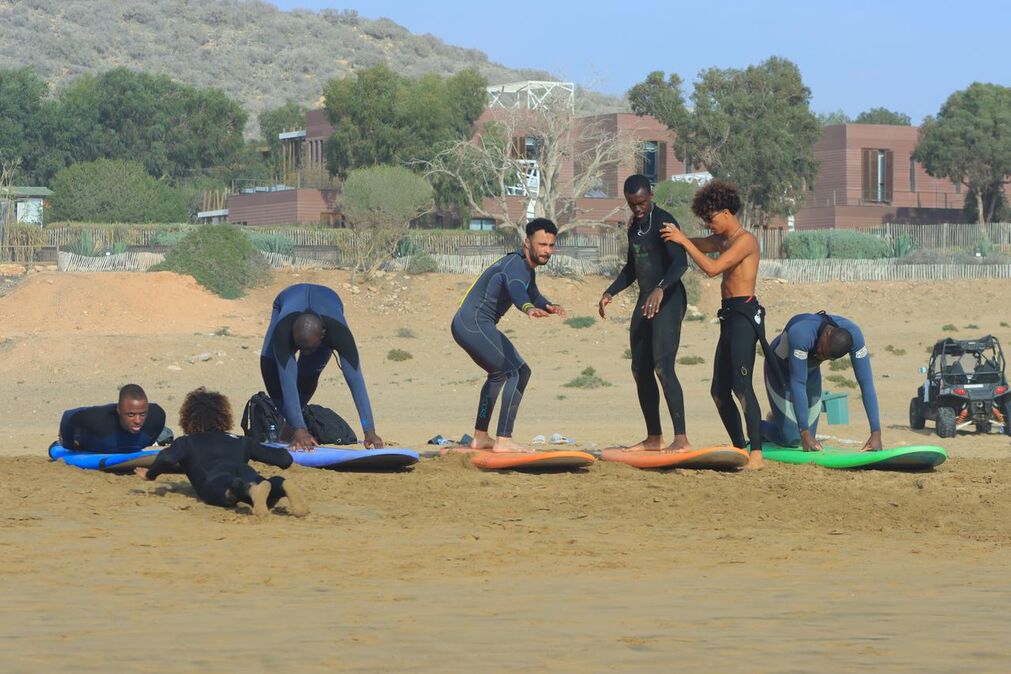
If you’re planning your trip and want to ensure you get the most out of your time in the water, I run comprehensive surf lessons in Taghazout that cover everything from absolute beginner fundamentals to intermediate wave selection and technique refinement.
With over ten years of experience surfing these breaks daily, I can take you to whichever spot is working best for your level on any given day—whether that’s mellow practice at Panoramas or pushing your limits at Devil’s Rock. Small group sizes, personalized feedback, and a focus on ocean safety and awareness.
Check out the full details at Best Surf Lessons in Taghazout to see what a week of structured instruction looks like and how it can accelerate your surfing progress.
Visit Surf With Reda to learn more about surf coaching in Morocco.
Read more About us or contact Us.
Bslama (see you later),
Surfing in Morocco
Reda
